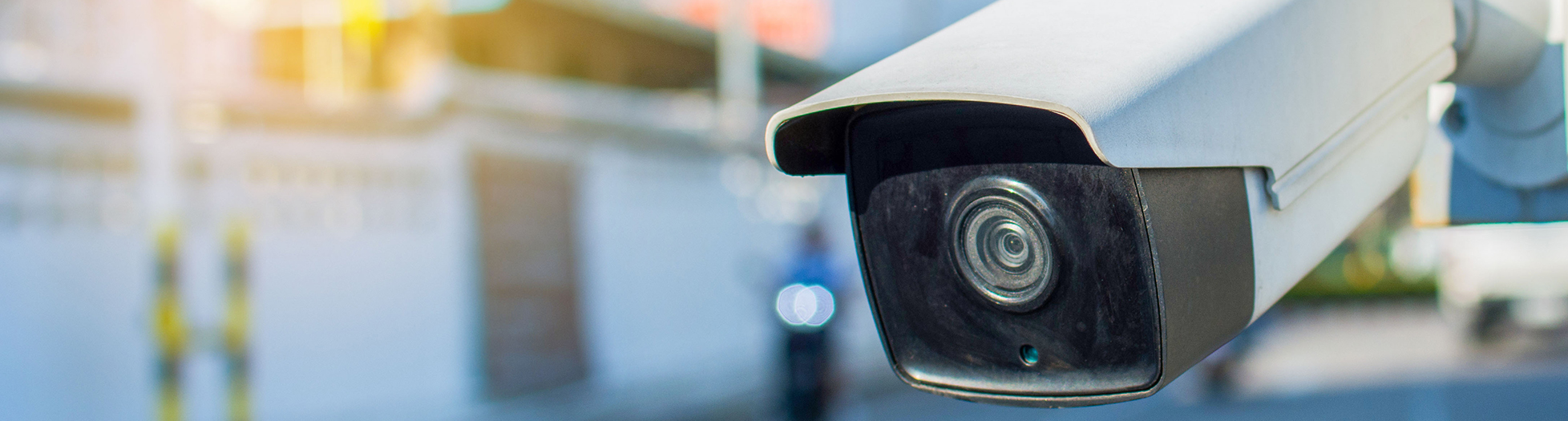
CCTV, also known as closed-circuit television, is a widely used means of surveillance and security for businesses and sites across all sectors. Not only is it an effective way to deter crime, especially intruders, and increase the chance of stopping criminals in their tracks, but CCTV can also improve the safety and wellbeing of your employees and cause improved internal business efficiencies. But have you ever wondered how CCTV cameras actually work? Did you know, that evidence shows that the use of CCTV can prevent 51% of car-park based crimes and 16% of all other crimes? Keep ready to discover all the ins and outs of CCTV cameras and how they effectively work to improve business safety and security.

How do CCTV cameras work?
CCTV cameras are just one part of an entire CCTV system. The system is made up of a set of cameras, monitors and a recording device, and there is the opportunity to add additional software to enhance the system. The CCTV cameras will work closely and alongside the other components of the system. Follow the below steps to see how the CCTV cameras work:
- The cameras will be placed around a site and in key areas to cover all key and vulnerable points. Such as car parks, entrances, exits and alleyways.
- Once positioned, the CCTV cameras work by taking a continuous sequence of images of the area they are set up to cover.
- These images are then transmitted to the recording device, either via a cable or wirelessly and over a WIFI connection, depending on the type of CCTV system in use.
- Once the images have reached the recording device they will be transmitted through to the connected display monitor. This allows security personnel to view the live footage caught on the CCTV cameras from around a site, all on one monitor and in one place. Of course, if a CCTV system is on a larger scale and has multiple connected cameras, more monitors can be added to allow all footage to be displayed at once.
- Depending on the CCTV system and cameras used, there may be the ability to control the cameras, in terms of zooming in and out and 360-degree rotation, from the monitor.
With CCTV monitoring in place, a CCTV camera can work even harder by working alongside sensors to alert a third-party monitoring company that there is activity on site. This means that any unusual activity or an intruder can be immediately identified and the necessary response actioned, all within a matter of minutes.
If you’re interested in professional CCTV camera monitoring, by an NSI approved ARC, get in touch with us today. Call us on 0330 002 1149 or fill out our online contact form for a FREE quote.
The Crucial Role of Remote Monitoring in Modern CCTV Systems
While the basic functionality of a CCTV system—capturing and recording images—remains the core principle, modern commercial security requires a more advanced, proactive approach. The sheer volume of data generated by cameras means that simply recording footage is no longer sufficient. This is where professional security monitoring becomes essential.
Instead of relying on staff to watch monitors or reviewing footage after an incident, integrating CCTV with an Alarm Receiving Centre (ARC) transforms the system into a genuine deterrent. Today’s sophisticated systems utilise video analytics and motion detection to filter out non-threat events, ensuring that when an alarm is triggered, it’s a priority. This enhanced efficiency is vital, especially considering the continued threat to commercial premises.
For example, while total police-recorded crime in England and Wales has seen fluctuation, the rate of robbery of business property rose by 55% in the last year. This underlines the need for immediate, verifiable response capabilities that remote monitoring provides.
Beyond Intruder Detection: Integrated Monitoring Solutions
The evolution of remote monitoring means that CCTV is often integrated with other critical site systems, providing a unified approach to risk management. This includes not only intruder monitoring but also environmental and health & safety surveillance.
Consider the risk of fire; while the number of primary fires in other buildings has seen a long-term decline, Fire and Rescue Services still attended over 7,000 workplace fires in England last year, with industrial and retail premises remaining among the most at risk, as reported by the Home Office.
A fully integrated system allows operators to use CCTV cameras to visually verify a fire alarm activation, ensuring a faster, more appropriate response from emergency services. Furthermore, our non-security monitoring services, such as fridge freezer monitoring, mean you can also protect valuable assets and inventory from system failures, a service particularly beneficial for our clients in the restaurants sector.
The Future is Proactive: AI and Advanced CCTV
As remote monitoring evolves, technology is moving towards truly proactive and predictive capabilities. Artificial Intelligence (AI) and machine learning are increasingly integrated into the video surveillance pipeline. This technology is already playing a significant role in reducing operator fatigue and increasing the accuracy of detection by filtering out environmental false alarms.
For those operating large or complex facilities, understanding The Future of Remote Monitoring: Integrating Smart Building Technology into your Security Strategy is critical. We often discuss how AI is reducing false alarms and operator fatigue in ARCs by recognising nuanced behaviours rather than just simple motion. This focus on verifiable events is key to meeting police response requirements and ensuring that every activation is a genuine threat.
Additionally, in modern business operations, safety extends to personnel. Using CCTV in conjunction with lone worker monitoring provides an extra layer of protection for staff working out of hours or in high-risk environments, as we detail in our guide on how monitoring services support your health & safety risk assessments.
Implementing CCTV Monitoring
Whether you manage a large industrial complex, as explored in Why Remote Monitoring Is Essential for Industrial Warehouses, or an office, remote monitoring is the difference between simply recording a crime and actively preventing one. It also helps businesses ensure what NSI Gold means for your business in terms of security compliance. Ultimately, remote monitoring ensures the cameras you invest in are actively working to protect your premises 24/7.
If you’re interested in professional CCTV camera monitoring, by an NSI approved ARC, get in touch with us today. Call us on 0330 002 1149 or fill out our online contact form for a FREE quote.
Share: